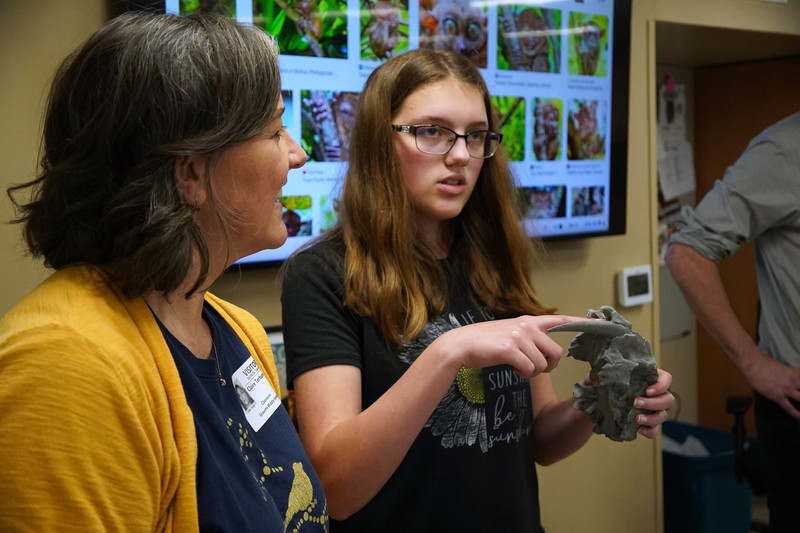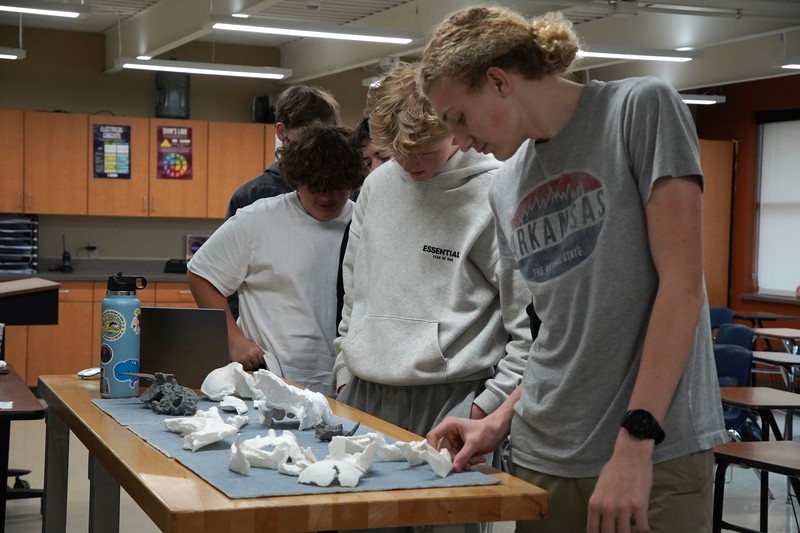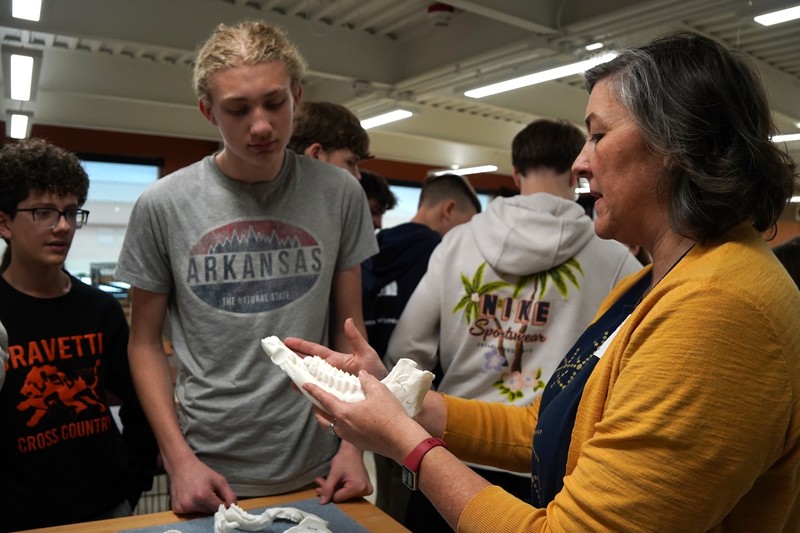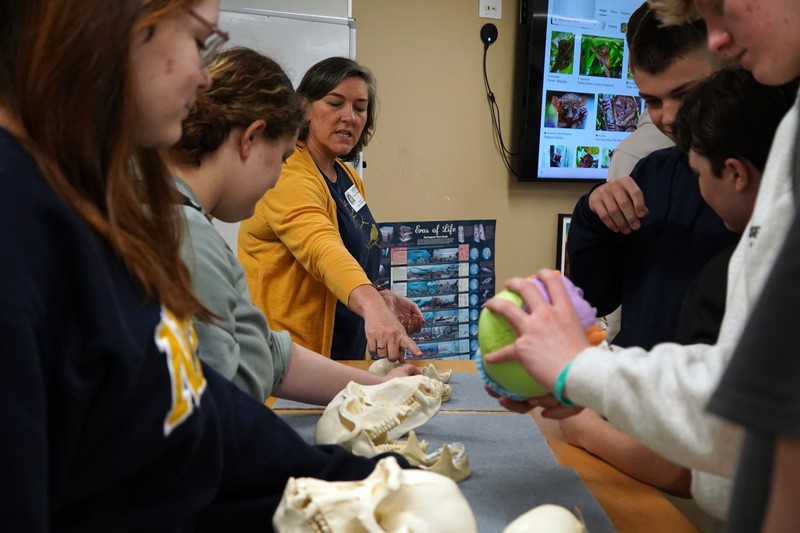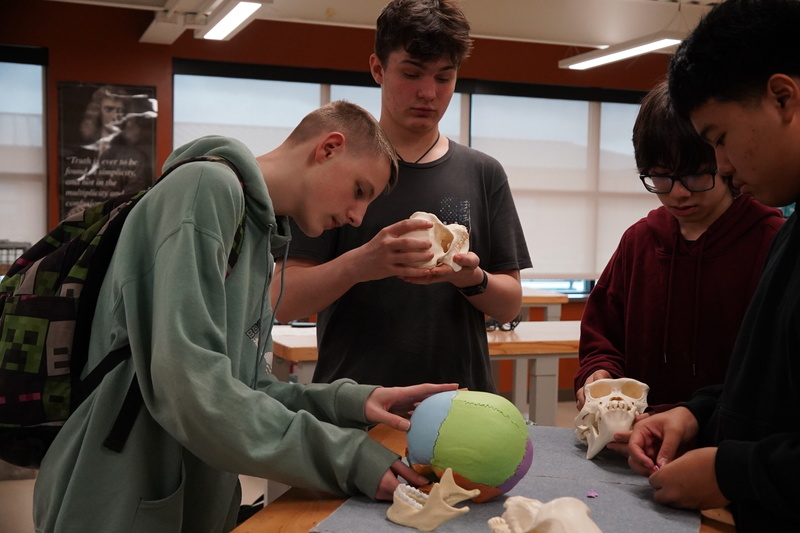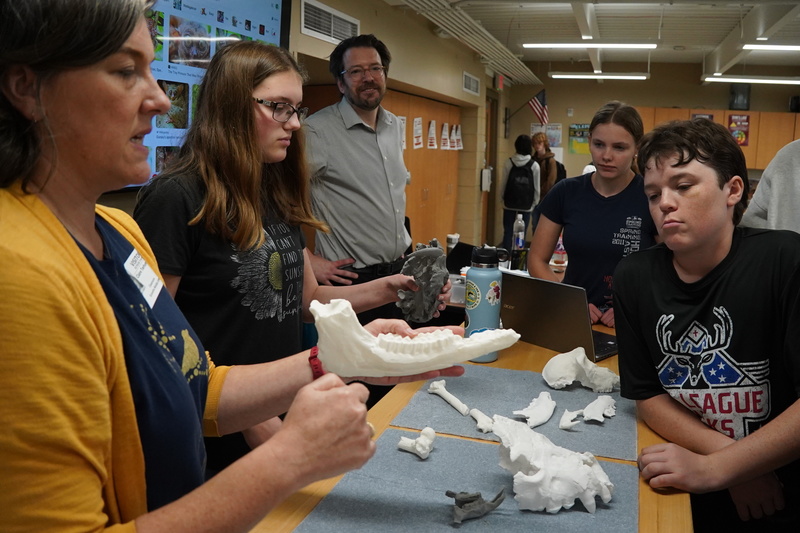
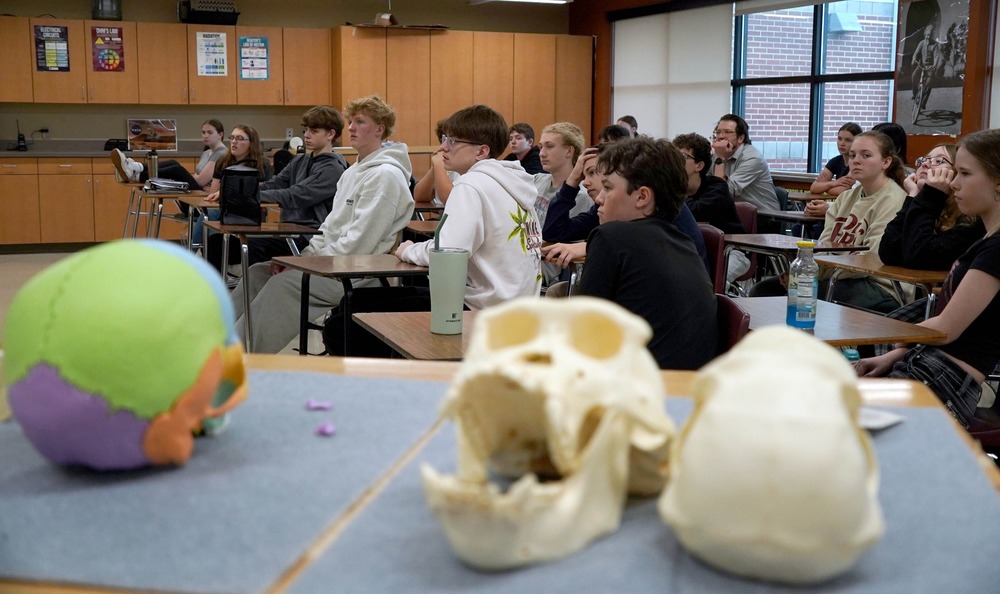
Students at Gravette Middle School recently stepped into the shoes of explorers and detectives. Mr. Leach’s science class welcomed Dr. Claire Terhune, a Professor of Anthropology from the University of Arkansas, for a fascinating look at how we reconstruct the history of life on Earth.
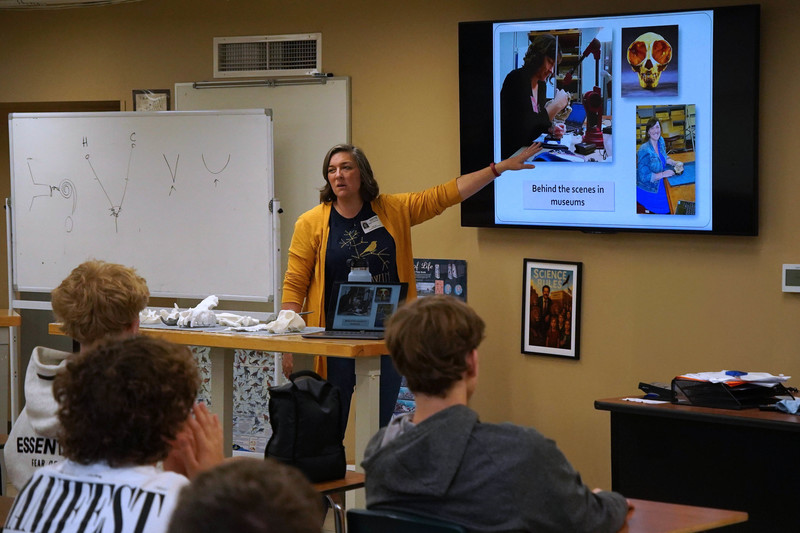
The session focused on the many ways lineages adapt to changing environments over time. Rather than just looking at bones as relics, students learned how to use them as clues to build a picture of skeletal and soft tissue anatomy.
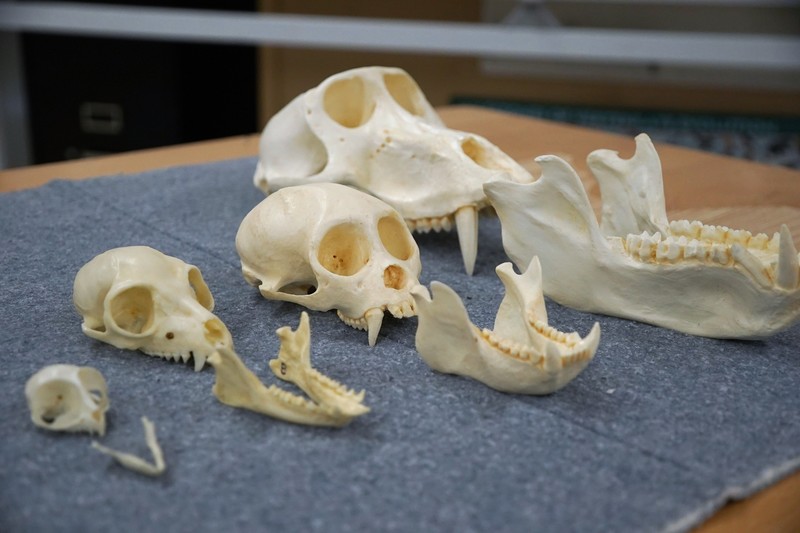
By studying remains from places as diverse as Ethiopia and Romania, Dr. Terhune showed how she and her team were able to determine what an ecosystem looked like thousands of years ago. Finding remains of animals like water buffalo, beavers, and hyenas can tell us an area was once lush with fields and flowing water. She shared how the shape of a jaw and the specific wear on teeth can reveal exactly what an animal ate and how it protected itself. The size and position of eye sockets indicate whether an animal was active under the sun or navigated the world nocturnally, as well as how they found food.
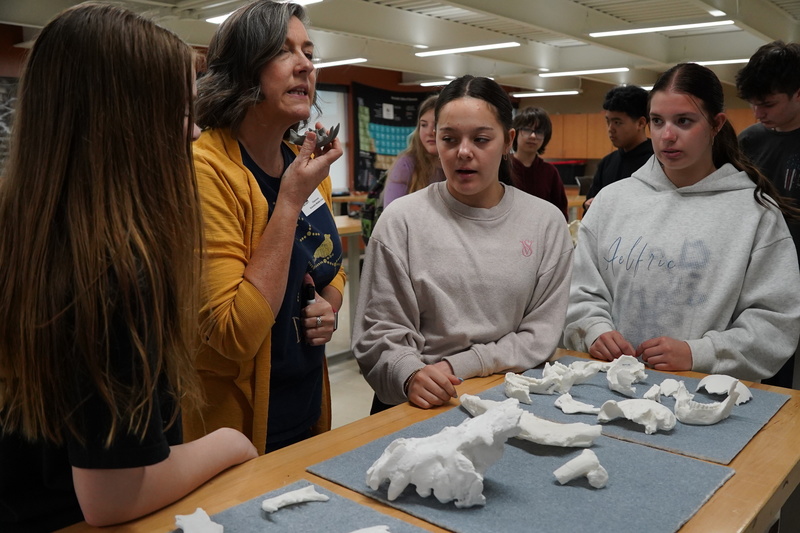
Dr. Terhune also gave students a "behind the scenes" view into the world of museums. She explained that what the public sees in a glass case is only a tiny fraction of the full collection. Most of the work happens behind the display walls, involving the grueling and precise tasks of preservation, identification, and record-keeping. There is a lot more than what we see in museums that goes into keeping fragile remains safe, solving the puzzle of which bone belongs to which species, and maintaining detailed history so future scientists can continue the work.
One part of the presentation focused on how different studies work together. Dr. Terhune discussed the intersection of Geology and Anthropology, showing how the Earth itself can warp or distort specimens over time. Understanding geological forces is the key to unlocking the true shape of a find.
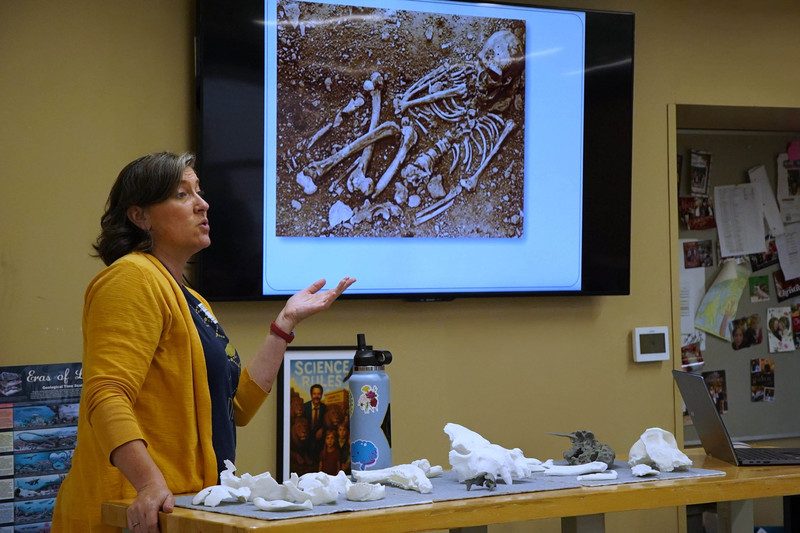
She also shared how uncovering remains can provide a window into the lives of our distant ancestors. In one moving example, she described a likely human burial site where a high concentration of pollen was found around the remains, suggesting that ceremonial flowers may have been placed with the deceased. Sites like these can remind us of the similarities between ourselves and those who lived thousands of years ago.
In a moment of reflection, Dr. Terhune spoke to the students about the nature of inquiry. She shared that while science is a powerful tool to explain how things happened, such as the mechanics of bone structure and the timing of environmental shifts, it doesn’t claim to answer the “why.” She encouraged students to see science as a way to understand the physical world, noting that the deeper questions of purpose and "why we are here" are personal journeys for each individual to discover on their own.
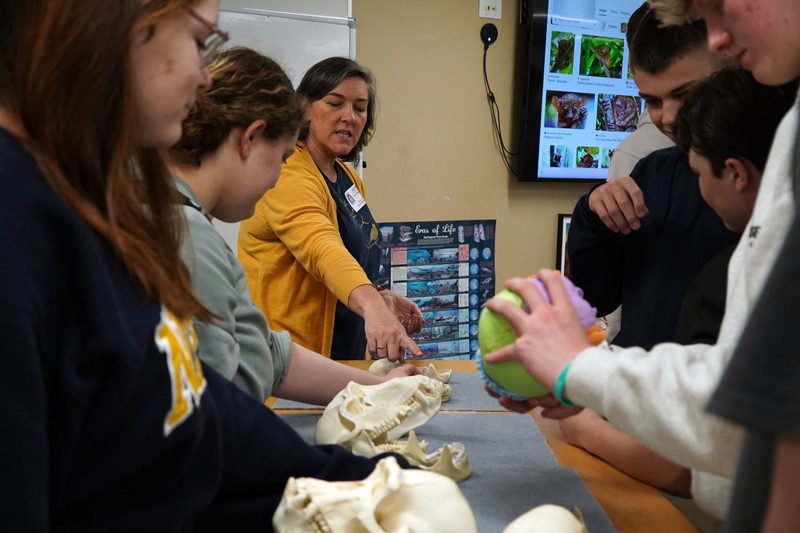
The presentation had students thoroughly engaged from start to finish, they asked insightful questions and showed a genuine spark of curiosity. Thank you to Dr. Terhune and the University of Arkansas for helping bring the field of anthropology to life in our classroom!