Gravette High School students continued to build on last year’s Top 5 state finish with another strong showing in science and engineering. Nineteen students qualified for the regional science and engineering fair at the University of Arkansas, with nine advancing to the Arkansas State Science and Engineering Fair held at the University of Central Arkansas. At the state level, Caroline Kelleher placed 3rd in the Chemistry division, and Jaxon Buth earned 4th in Engineering.
For science students, the project development process began early in the school year. “Our students start in September by choosing a topic that relates to their own interests and daily life,” Gravette High School Science teacher Alison Schaffer explained. From there, students plan experiments, conduct background research, develop hypotheses, and complete trials. “Students work both in class and at home over about four months, developing their ideas into finished projects. Many of those experiments are tied to things they already enjoy, like sports, art, or video games” said Schaffer.
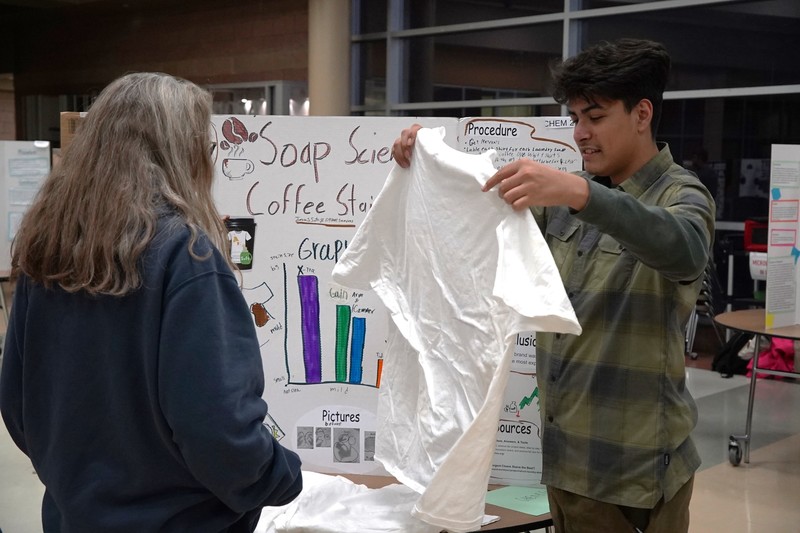
A student presenting research findings on soap performance on clothing stains.
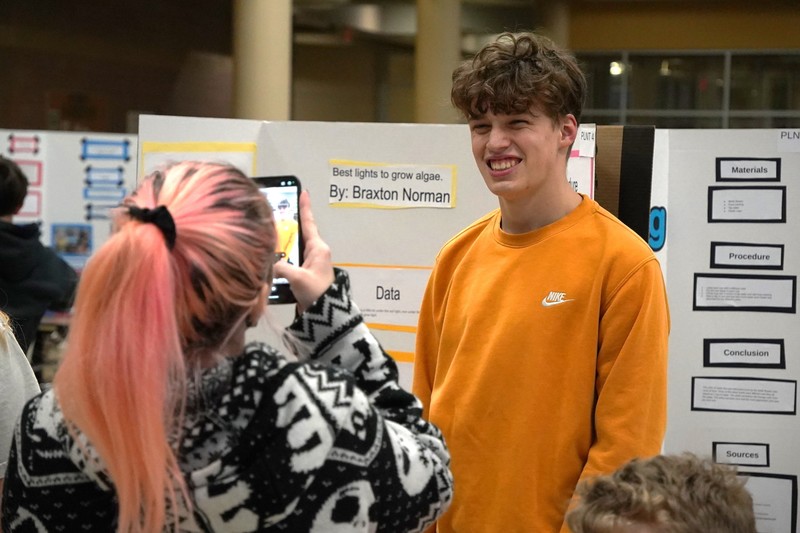
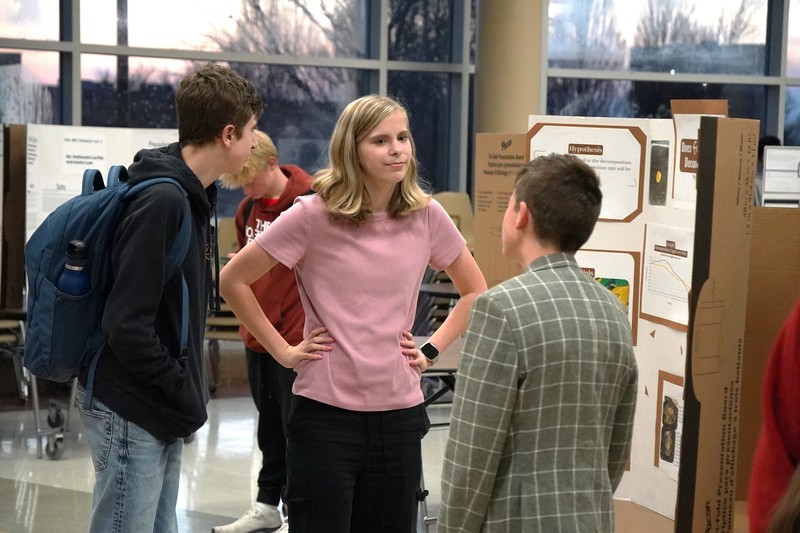
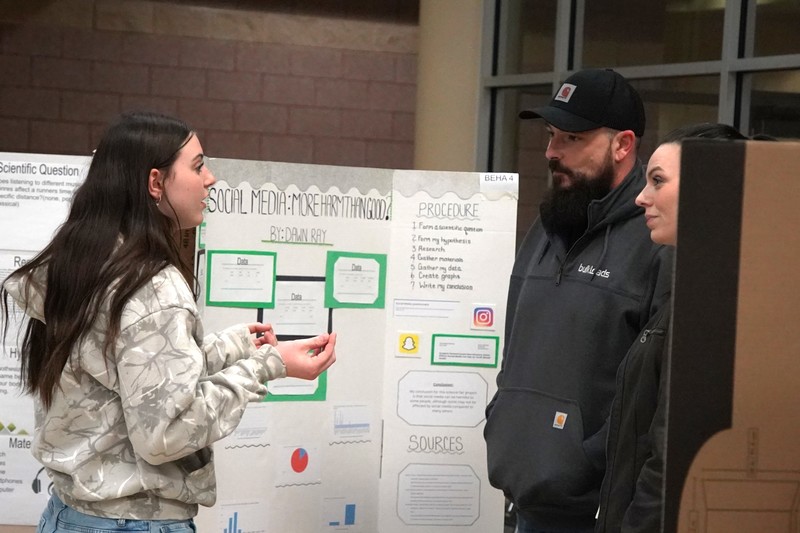
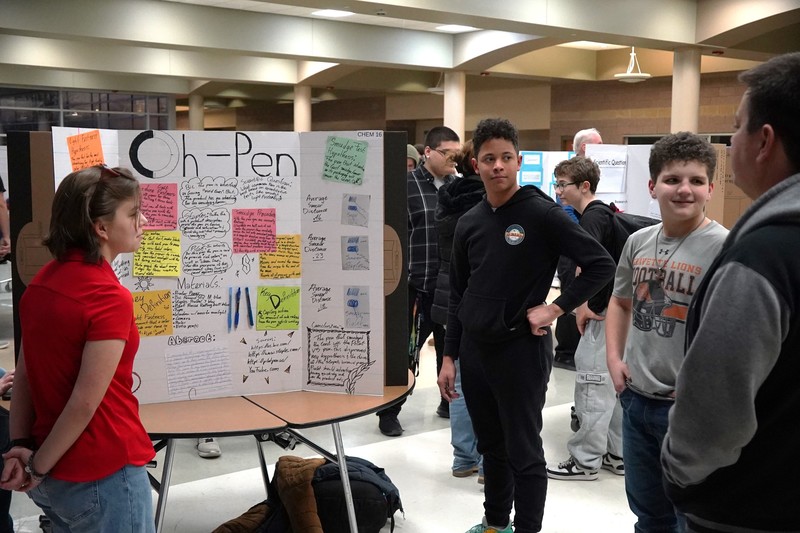
The first chance for students to share their research came at the Gravette High School science fair on February 3rd. For their interest in athletics, three freshmen, Jasper, Easton, and Lexi studied the bounce of different balls on different surfaces. Freshmen Easton Crane studied the effects of caffeine on reaction time. Other subjects included the effects of social media on mental health, trait inheritance in families, reading comprehension, and food safety. Freshman Luna Thornton decided to use the science project as an opportunity to test consumer pens against advertising claims. “A lot of brands claim they have quick-drying ink or vivid colors,” Luna explained, “but when I tested them, the ones that advertised the most didn’t actually perform the best.”
Luna presents on different ink types of different brands of pens.
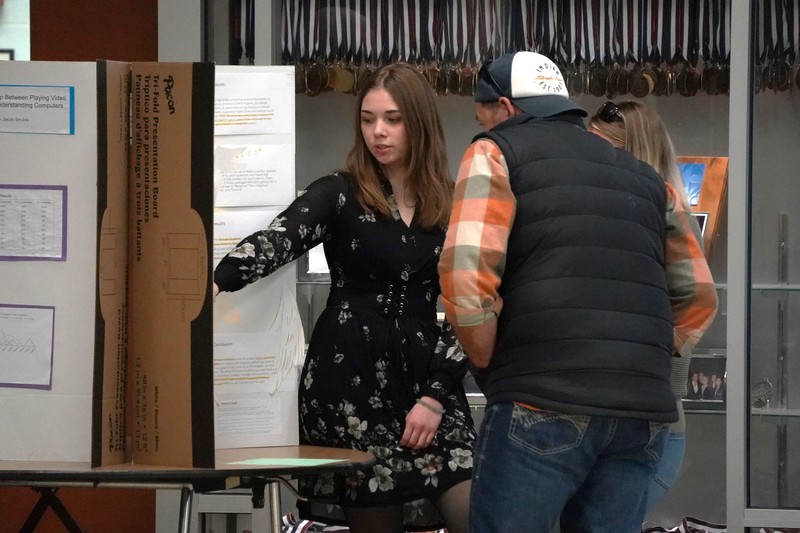
Jackson Bittner turned his career ambition in meteorology into inspiration for his science project. “I’ve always been really curious about thunderstorms and what it takes to make one. I researched things like daytime heating, humidity changes, and wind patterns. Just all the factors that come together to create a storm.” Brian Maddox, a freshman and former student of Mr. Leach’s Middle School science class, extended his research on bottle rockets after last year’s classroom activity. “I had the winning bottle rocket in my class last year, so I decided to use it again for my science fair project,” Brian shared. “I thought more fins would create more drag and slow it down, so I expected four fins to work best. But I was wrong. Zero fins actually stayed in the air the longest.” Interest in musical instrumentation drove Sophomore Danny Perry in his research. “I love drums, and I wanted to learn more about what I could do with them. I looked at different materials and how they affect tone and pitch so you can customize the sound.”
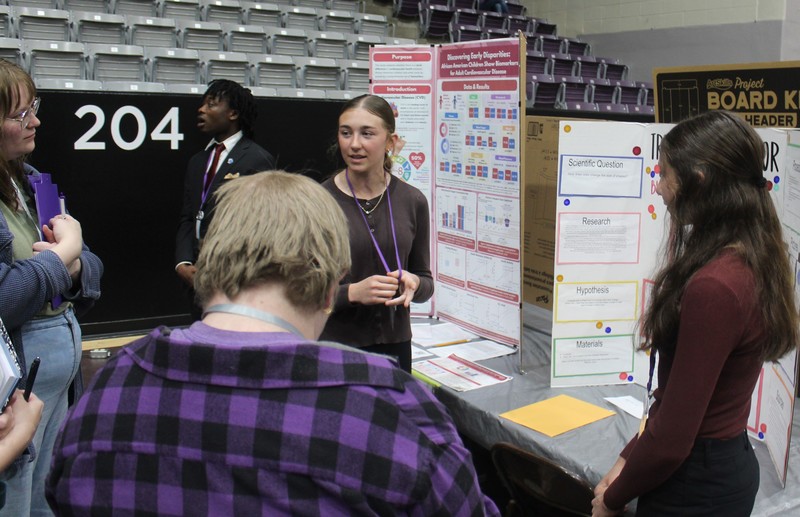
A student presents research at the GHS science fair.
“A great project is built on strong science,” said Science teacher Susan Kedrowski. “Students have to think deeply about what they’re doing and complete enough trials to produce valid data.” That process often challenges students to move beyond initial ideas and figure out how to actually collect and interpret meaningful data, reinforcing the realities of the scientific method. “For some students, this is where they really shine.” Schaffer explained, “You don’t always know what they’re great at until they have the chance to do something like this.”
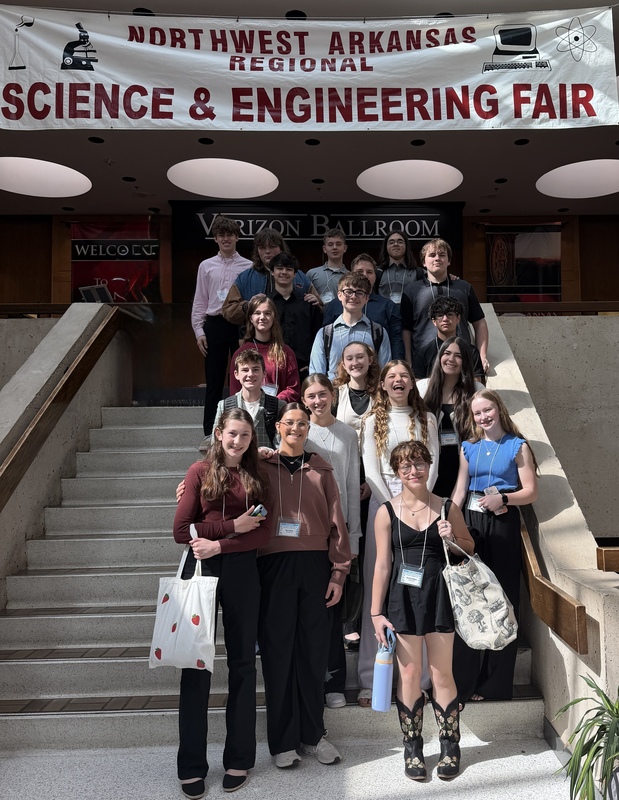
The projects presented at the Gravette High School science fair included volunteer judges; local professionals such as engineers, medical personnel, educators, and alumni, all of whom contributed their time to evaluate student work and select top projects. Those selected advanced to the regional science and engineering fair on March 6th at the University of Arkansas.
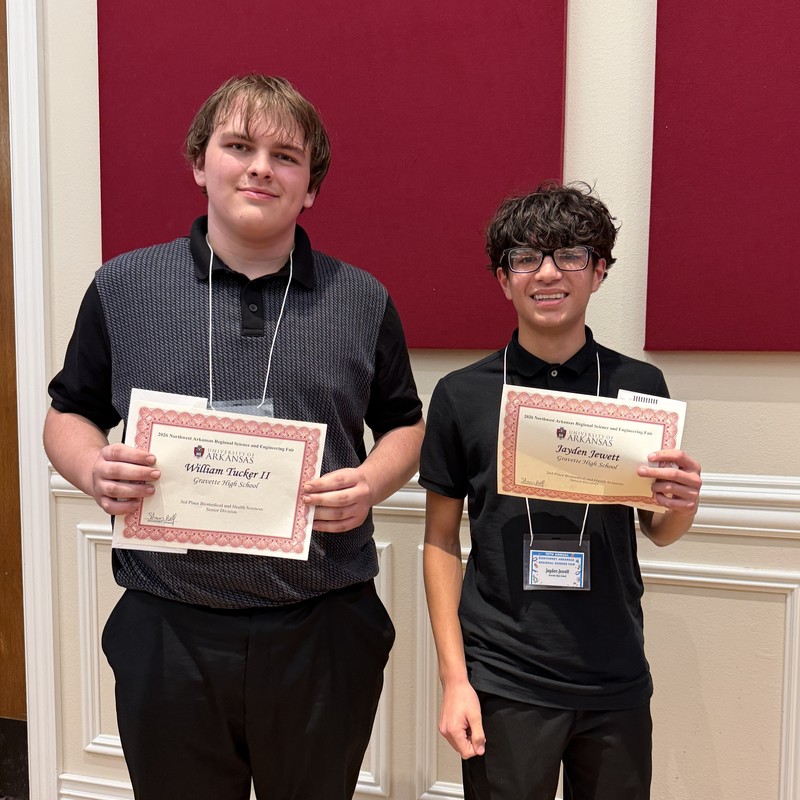
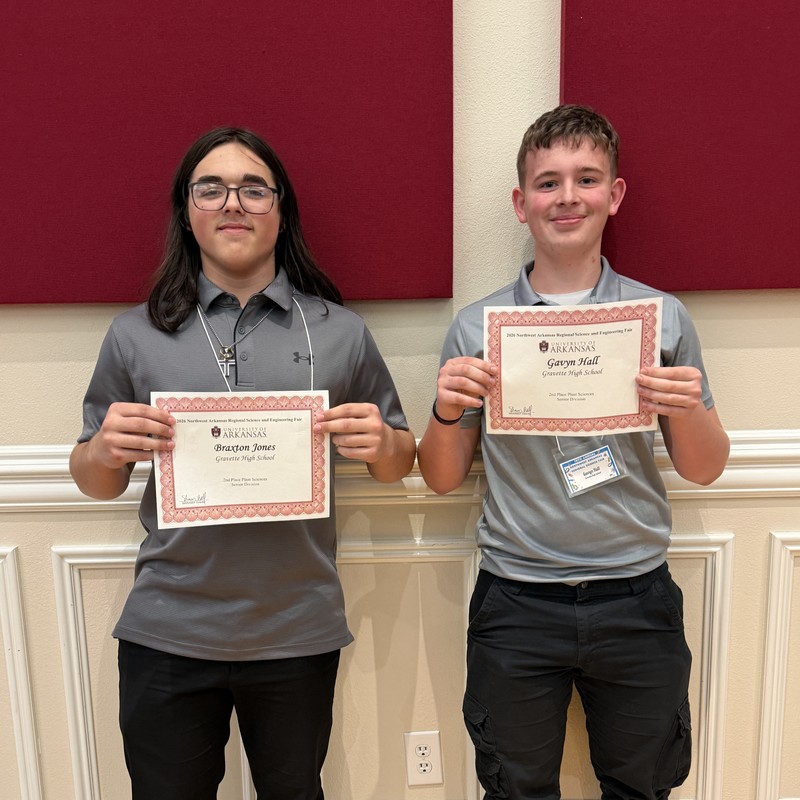
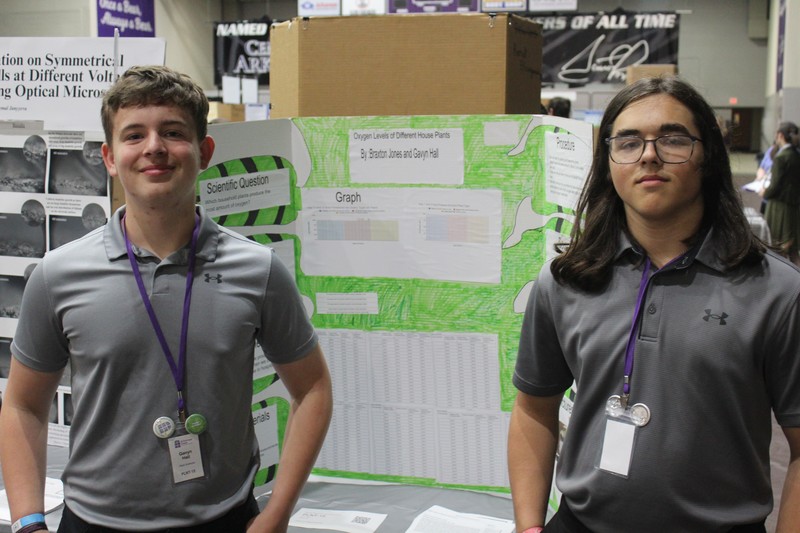
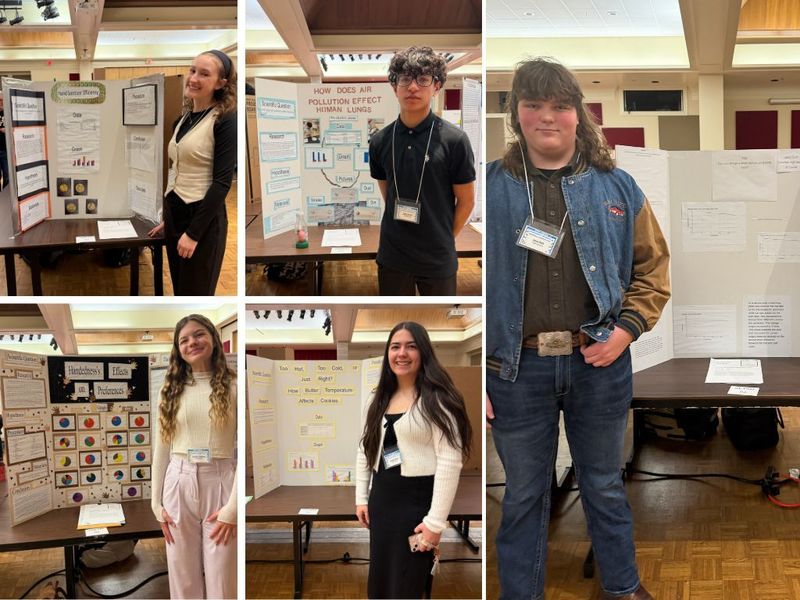
GHS Students at the Regional Science Fair hosted at the University of Arkansas.
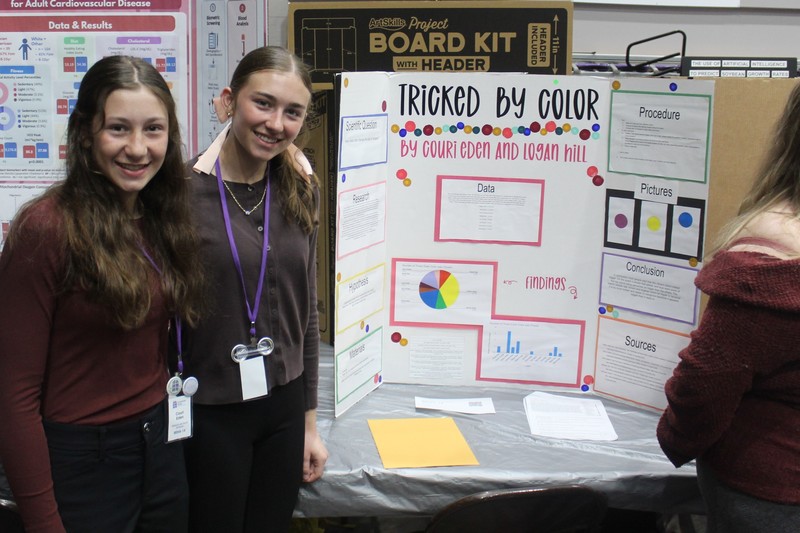
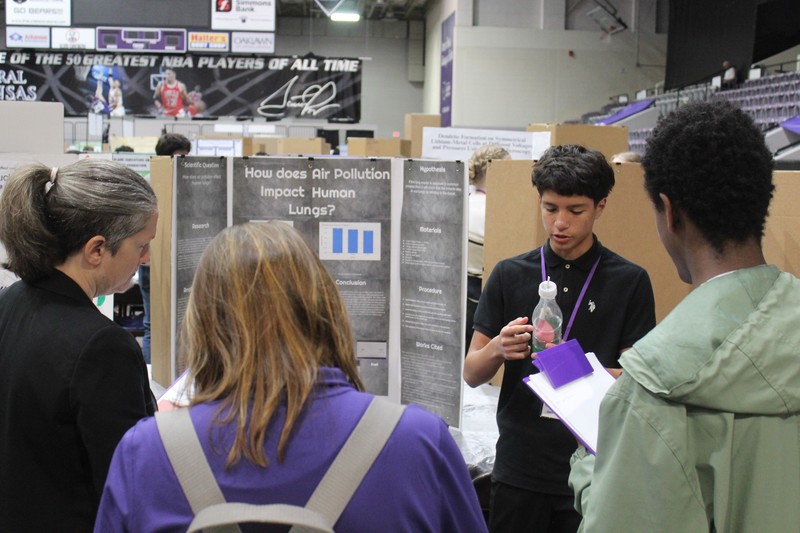
The Gravette High School showing at the regional science fair featured a diverse array of projects ranging from biological studies to mechanical engineering. Students like Braxton Jones, Gavyn Hall, and Braxton Norman focused on botany, investigating how light spectrums and plant species affect oxygen production and algae growth. Health and human biology were also popular themes, with Ella testing the germ-killing power of hand sanitizers, while Jayden Jewett modeled the physical impact of air pollution on human lungs. In the realm of psychology and perception, Couri Eden and Logan Hill explored how color can trick the brain, Celia Mellers compared memory retention between digital and physical mediums, and Laughter Galloway analyzed how being right or left-handed influences personal preferences.
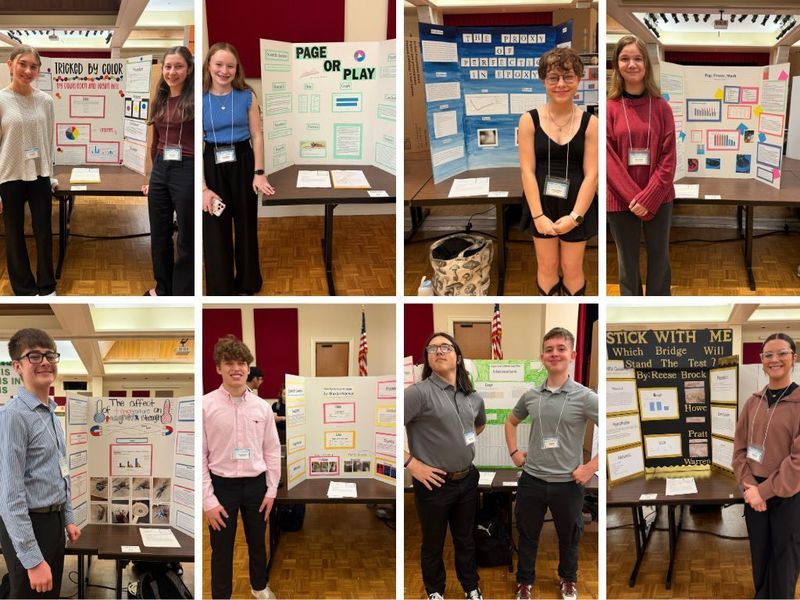
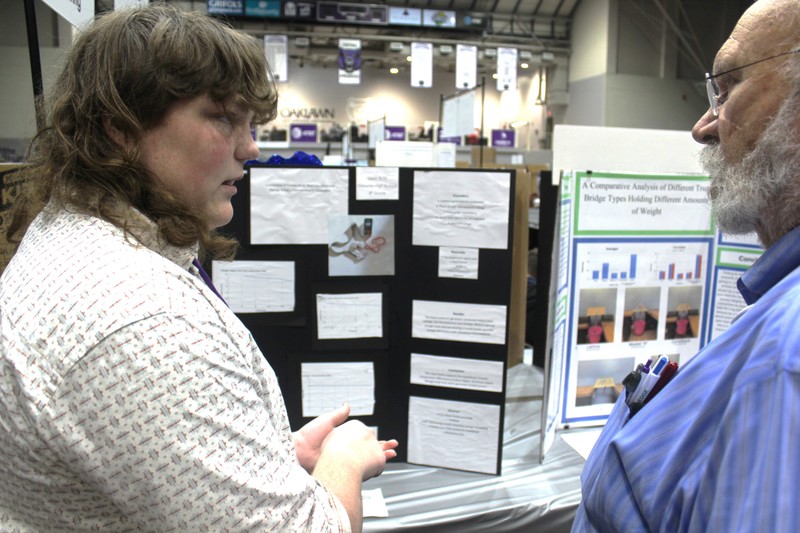
Other students explored the physical sciences and "kitchen chemistry" to uncover how environmental variables change material properties. Rome Parker explored energy and physics, with Rome testing how temperature affects magnet strength and Jaxon investigating the potential of harvesting body heat to charge electronics. Engineering was represented by Reese Brock, who stress-tested different popsicle-stick bridge designs. Even the culinary arts got a scientific makeover, as Kareena used the scientific method to determine how butter temperature alters the texture of a cookie, and Essie Strecker tracked the precise freezing points needed to create the perfect carbonated slushie.
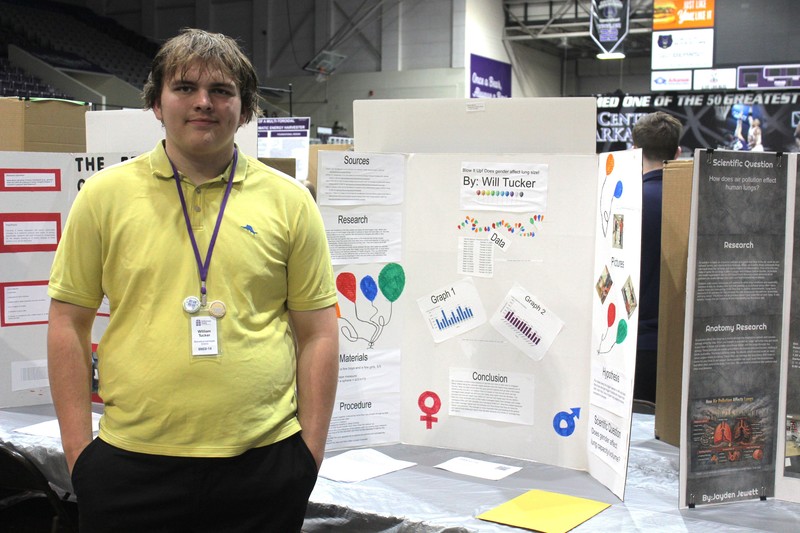
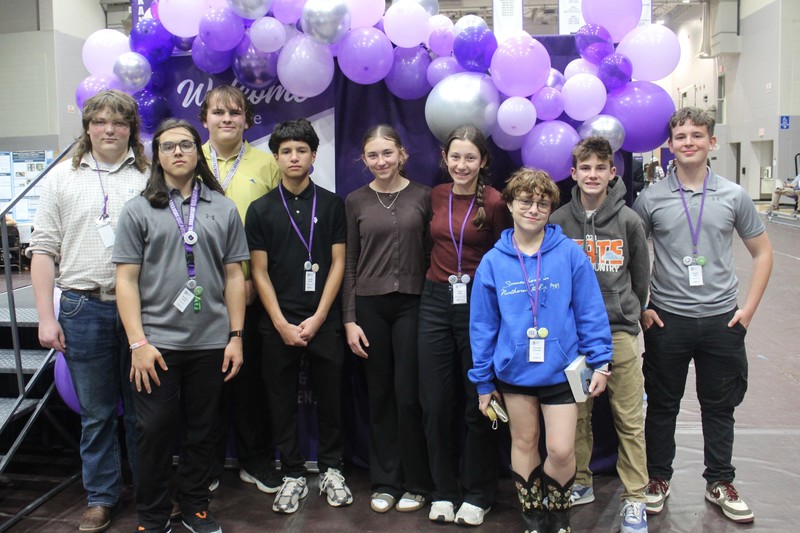
Nineteen Gravette students competed at the regional fair, and nine students including Levi Keeton, Caroline Kelleher, Logan Hill, Couri Eden, Braxton Jones, Gavyn Hall, Jaxon Buth, Jayden Jewett, and Will Tucker all earned the opportunity to advance to the Arkansas State Science and Engineering Fair at the University of Central Arkansas on April 3rd.
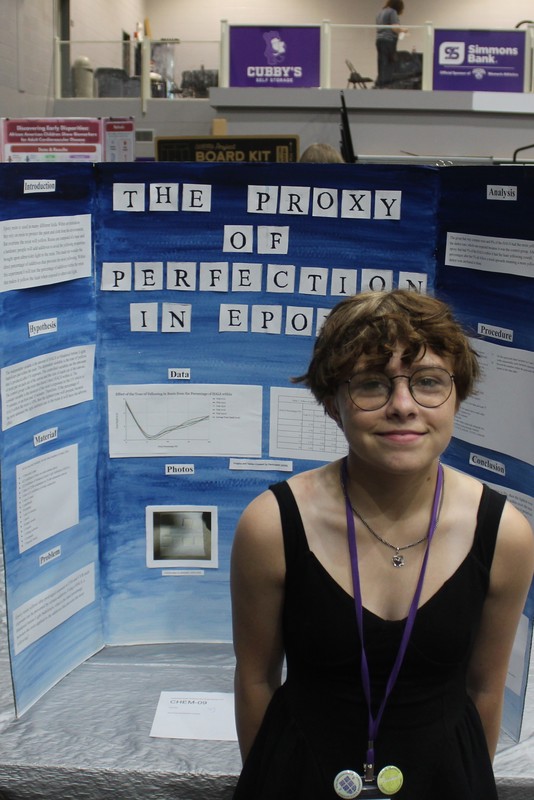
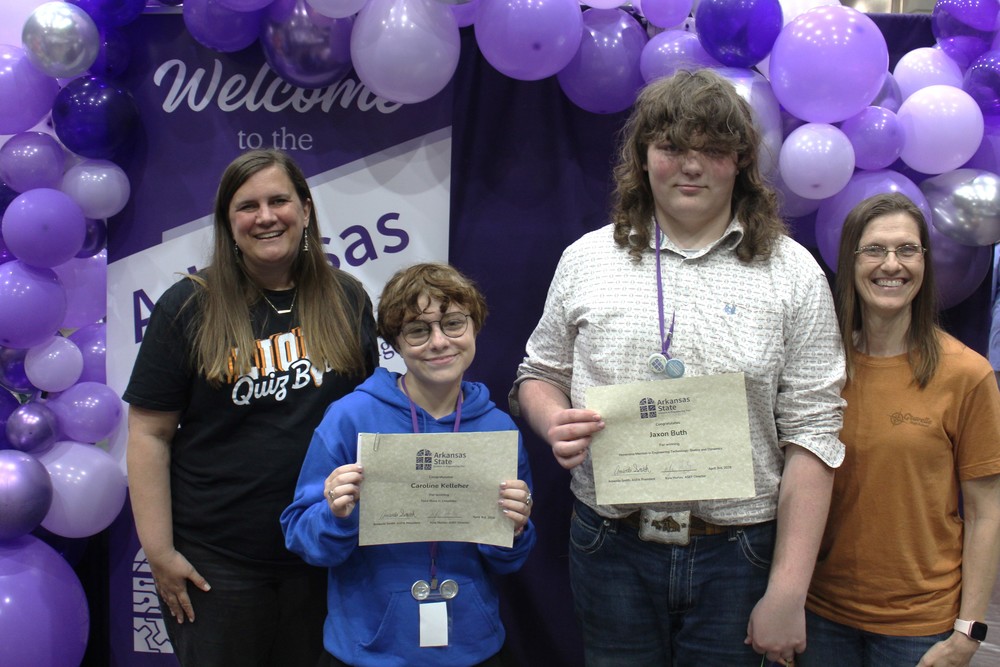
Nine GHS students at the State Science Fair
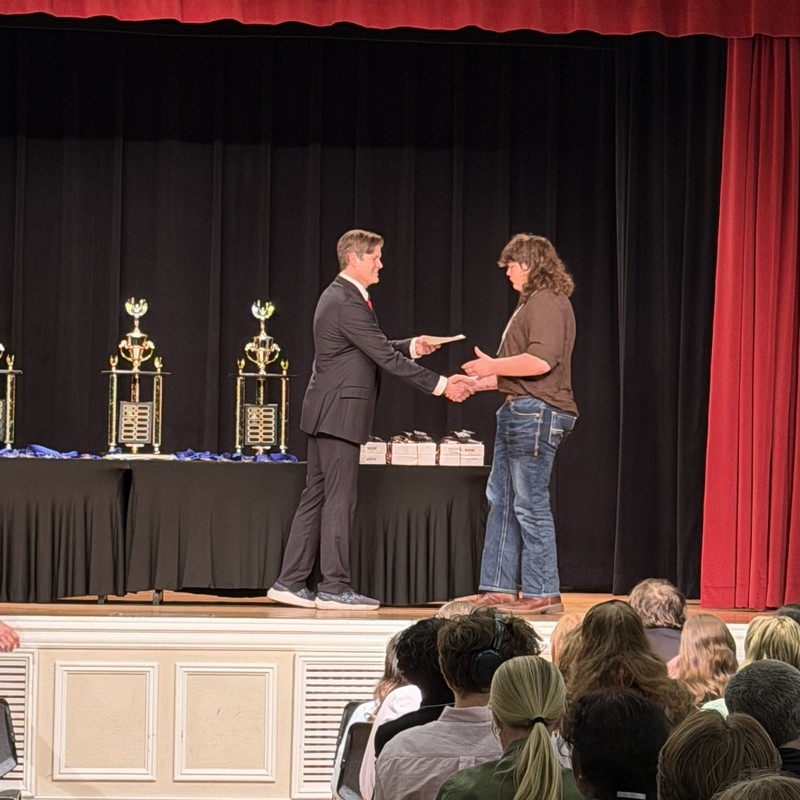
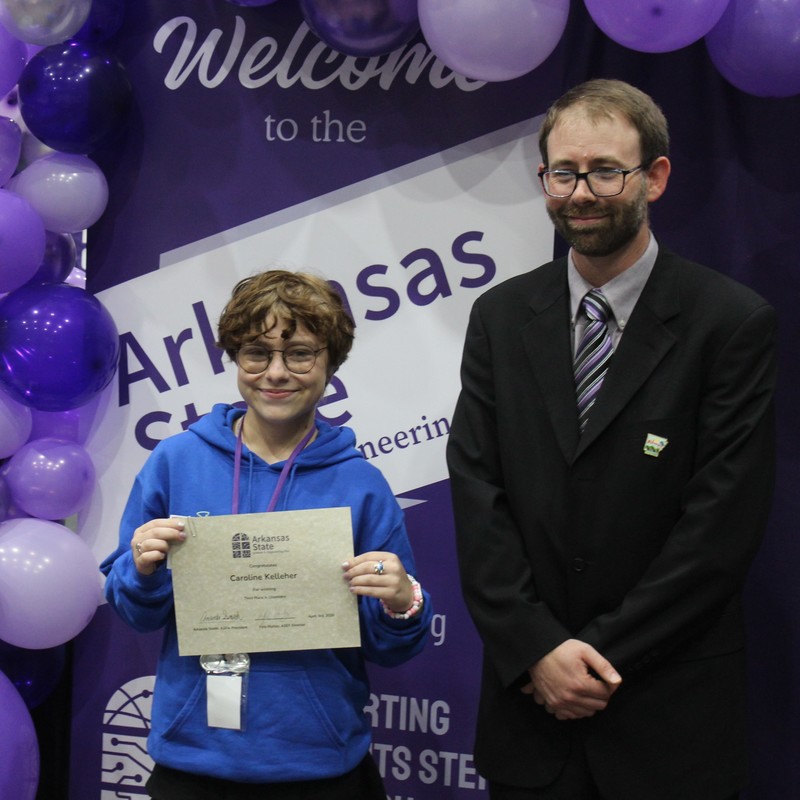
At the state level, Caroline Kelleher placed 3rd in the Chemistry division for her presentation involving the chemical composition of epoxy.
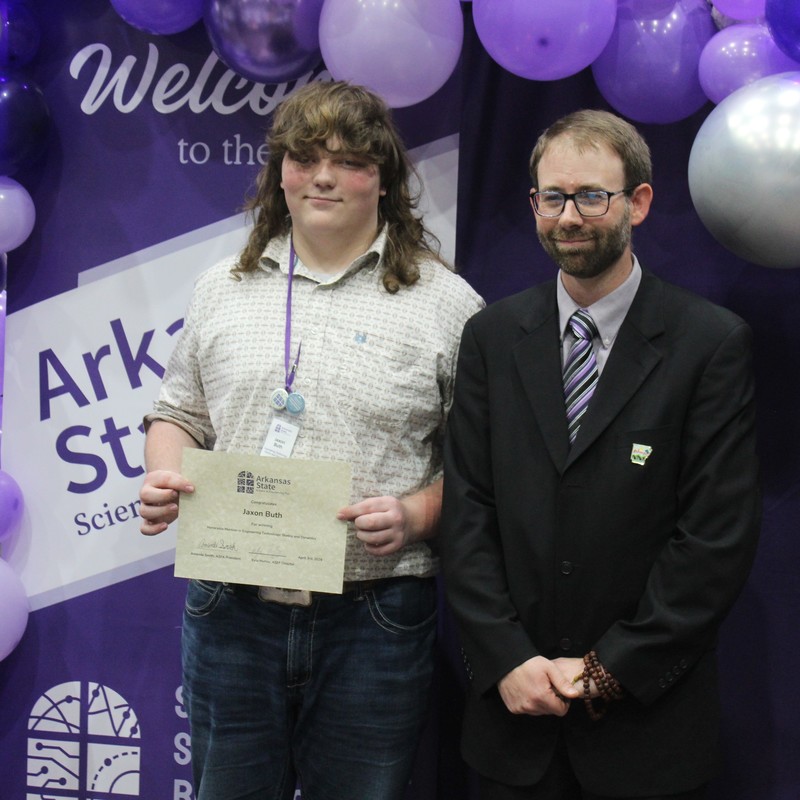
Jaxon Buth earned 4th in Engineering for a presentation on capturing human body heat into electric energy.
Through months of research, testing, and revision, students learn how to ask meaningful questions, adapt when results don’t match expectations, and communicate their findings clearly. The district extends its appreciation to the teachers who guide students through the process, the parents who support them along the way, and the community members who volunteer their time as judges. Their combined efforts help create opportunities for students to explore their interests and discover what they are capable of achieving. Congratulations to our science fair winners and we look forward to another strong performance next year.